Tuesday, 12 October 2010

Golf Project

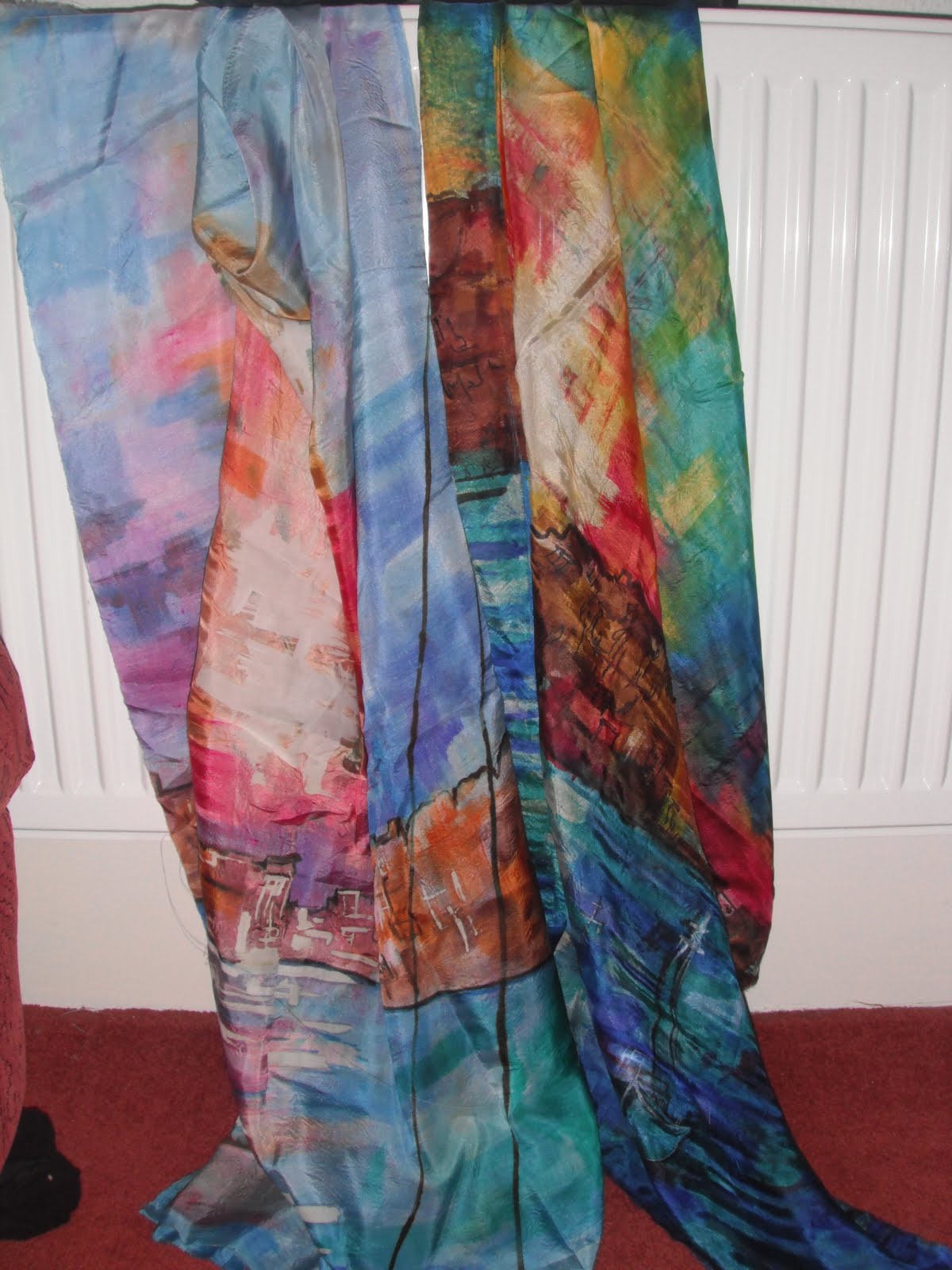
Our most recent project for uni is to design a fabric to be used in a golf course currently being constructed in carnoustie.
The breif is fairly flexible and within this i chose to design a cloth depicting a sea landscape, i considered this a continuation of my summer project.
Our trip to Auchmithe helped build a body of research and coinsided with my previous sketchbook as my source drawings were all gathered from beaches.
Although my images from Turkey differ from those of Auchmithe, i wanted to take elements of each to create a fabric.
Although the bulk of my sketchbook contains structural drawings of Auchmithe, i refered to my summer project for a colour pallet. I thought by taking some of the reds and peaches from the summer project, it would create a slightly more exciting, warm colour pallet. (It rained pretty heavily on the trip to Auchmithe)


Wednesday, 6 October 2010

Assessment 1- Culture & Design

Culture & Design


Culture characterises a society. It brings a sense of identity to a person, the culmination of their social and economical status, history and way of life. The world is made up of many different cultures bouncing off each other, often containing conflicting ideas on the way a person should live and how a society should be maintained.
Culture buries itself within every aspect of the world we have created. It shows itself through agriculture, religion, architecture, art, music, fashion and lifestyle and is forever being manipulated and transformed through the modernisation of societies all over the world.
Culture does not necessarily affect the physical wellbeing of a person, but it enriches countries, giving people definition and a stronger identity.
Cultivating a sense of identity within a community is a way of bringing people together regardless of social status as it is an aspect in which these people can relate to one another. The word “culture” provokes the idea of the accumulative beliefs, values and experiences of a society, thus creating a strong sense of community. Through using these similarities such as religious ideals, history and experiences as a foundation we can begin to build the idea of a society.
Factors such as habitat, upbringing and lifestyle can be considered as a catalyst for the way a person thinks and chooses to live their life. When a person is born into a society, be it consciously or subconsciously they are manipulated and moulded by its surroundings and background, absorbing the information they have been taught and observing the behaviour of the people close to them, they themselves begin to reflect these traits and in turn are able to create a sense of self. Cultural groups can have conflicting ideologies but this is not to say any one is wrong. The constant modernisation of these factors such as habit, lifestyle and backgrounds allows cultures to expand and therefore allows people to express them selves creatively within the standards set within their communities, thus creating an eclectic range of cultures through out the world.


History of Culture.

Throughout centuries cultures have developed and expanded in order to cater for the ever transforming and modernising world. The phrase “History of Culture” is one which can open an endless debate. Culture is a word which categorises and characterises people from all different areas of the world. It is a word that has no beginning and no conclusion. As long as there has been a civilisation, some form of culture has been prevalent.

"both sides of human consciousness - the side turned to the world and that turned inward - lay, as it were, beneath a common veil, dreaming or half awake. The veil was woven of faith, childlike prejudices, and illusion; seen through it, world and history appeared in strange hues; man recognized himself only as a member of a race, a nation, a party, a corporation, a family, or in some other general category. It was in Italy that this veil first melted into thin air, and awakened an objective perception and treatment of the state and all things of this world in general; but by its side, and with full power, there also arose the subjective; man becomes a self-aware individual and recognises himself as such." – Jakob Burckhardt

In this passage Burckhardt refers to the Renaissance in Italy. He discusses the idea that people are manipulated by their surroundings and are in a sense indoctrinated to fit into a structure. He refers to a time in which people seemed to be breaking free of this predetermined formation and in turn allow themselves to become an individual. There has certainly been a prominent change in the structure of many cultures, particularly that of western civilisation, but we can still recognise today many societies and religions that maintain the strict moral codes which were enforced thousands of years ago.
Gender for example, is an issue which has affected many cultures for thousands of years and is in constant flux. In Britain for example, no more than 50 years ago, men were considered as superiors and women were given little rights; unable to work and vote. Over the past decades, after woman’s rights activists groups such as the suffragist and the suffragettes fought for the case, the social status of women began to shift. This in turn can be considered a development in our culture. Social and political issues change, and therefore allow us to move forward as a society. By doing this we are granted a form of freedom and identity, yet still maintain the basic foundations of our cultural backgrounds.
Considering gender as a cultural issue, we can examine current societies, in which religion dictates patriarchal ideals. It is still common in many parts of the world for woman to be the submissive and inferior being, a structure which is conformity of various religious beliefs. This is an example however of a strict religious stance. As Society moves forward and allows people to express themselves, many religions have also incorporated their ideals into modern society, again allowing people to have their beliefs yet not constrict themselves into living a specific lifestyle.
Political, economical, social status, religious ideals, life-style and backgrounds amongst many other issues, collectively create a society. As these factors expand and transform, as do cultures.

Culture and Design

“Ethnography, as I use the word, consists of the processes and products of research that documents what people know, feel and do in a way that situates those phenomena at specific times of individual lives, including pertinent global events and processes…If we pay attention to cultural variability among individuals, we make the reality of social groups, the existence of cultures and the location of cultural boundries empirical issues that require explicit test for construct industry.”- The Construct Validity of Cultures, Culture Theory and a Method for Ethnography- W. Penn Handwerker

Culture is an area of design which must be well considered in order to create a successful product. A design must be made with the intention of a target market. Awareness of social, political and current affairs is an integral part of an effective design.
In Roland Barthes essay “The Rhetoric of the Image” he discusses these ideas in depth. He investigates ideas of the semiotic theory, linguistics and epistemology- a branch of philosophy that investigates the origin of human knowledge. This exemplifies the idea that a design cannot be created purely for the sake of design. A design must be contextualised and relevant to the consumer.

We can look at clothing as an example of the ways in which culture effects the outcome of a design.


Clothes can be used as a way of expressing religious views, beliefs and social status. We can recognise this throughout the world through various cultural groups.

“What accounts for the discrepancy between Kalabari claim and the director’s dictum? How does this relate to dress ethnicity? The answer emerges from Kalabri history, geography and culture. As traders in a global marketplace, they established a reputation for independent spirit and were selective in their taste for trade goods. Their competitiveness and fierce pride, as members of one of the smaller ethnic groups in Nigeria, resulted in a continued effort to distinguish themselves visually from others, and produce their unique Kalabari forms of dress.”- Joanne B. Eicher and Tonye V. Erekosima

To consider culture in relation to design we as designers must hold an extensive knowledge of the market our design is aimed towards.
Cultures throughout the world have conflicting ideologies, beliefs and backgrounds and this must be considered throughout the design process.


The Fabric of Cultures: Fashion, Identity and Globalisation.

Handwerker, W. Penn, American Anthropologist, The Construct Validity of Cultures, Culture Theory and a Method for Ethnography.

Eicher, Joanne. B (1995), Dress and Ethnicity, Oxford, Berg Publishers Limited

Material Religion; Religion & material culture at the V&A museum.

Barthes. R, Rhetoric of the Image

Friday, 1 October 2010

Auchmithe


Auchmithe- "Its the Blackpool of scotland".

Shortly after returning to uni, we took a day trip to Auchmithe to do some drawings.
Its a borderline village which has a handful of houses, a single worn down public toilet and a cafe which is closed on tuesday, being the day our trip fell on.

However, if drawing or photography is what you're in need of, its a great place to go. I must have spent about 2 hours (minimum) walking about the beach finding things to photograph and came away at the end of the day with hundreds of photos. The idea was to gather together drawings to lead us into our next uni project, i managed a few drawings despite the hurricane winds but was mainly focusing on photography and considering images which could be used for our next project.

I started to consider images which i could translate into our studio project.
Our most recent brief was to design a fabric which could be used in a golf course currently being built in Carnoustie.
Within this brief i wanted to look at sea landscapes, and ways in which i could abstract them in order to create an intresting fabric.
To achieve this i began to look at rock formations and the linear stuctions in landscapes.


Wednesday, 1 September 2010

Turkey- Summer 2010

During the summer me and a friend went on a weeks holiday to Gumbet, Turkey. AMAZING fun and beautiful place.
I'm planning to go back mid-eurotrip next summer.
When i was away i took a few photos i could develop into interesting paintings. I also thought i could take advantage of the scenery and base my summer project on Turkish sea landscapes.


I thought these images could be developed into both interesting fabrics and paintings. I wanted to capture the colours which seemed to seep from the sky into the sea. The silhouette of the buildings and hills could act as an interesting focal point in a composition.
I thought i could maybe encorporate elements from previous photos i'd taken during the holiday.


I decided to look at the shapes of the boats in attempt to create a stronger composition. This would allow a contrast between the soft, natural colours of the sky and sea against the hard, linear structure of the boats.
Over the past few weeks i've been playing about with these ideas and painted a few canvas's and fabrics.


Wednesday, 31 March 2010

Assignment 5B

Our next assignment was to combine what skills we have learned from our design studies class with our existing studio projects. This is helpful to me as a textile designer as a large portion of what our jobs entail is to understand in depth what consumers want. It is an intrinsic part of our job to take into account social and political aspects as this, be it consciously or subconsciously, will effect what people want to buy and will view as a good design.
This idea has been particularly prevalent within the past few years as the economy has been fluctuating. People have become more aware of their finances and what they spend money on which in turn becomes an issue designers have to consider within their work. To be able to extract these social, political and cultural issues, again alot of research is compulsory if i successful design is to be developed. We can here also refer back to Barthes discussions in "The Rhetoric of the Image" in that he suggests that in a way, designers have the ability to manipulate people and influence them in seeing an image in the way we desire. If all the appropriate information has been collected that surrounds an issue, using our skills we can manipulate and transform it in a way society may find themselves attracted to i.e. by extracting those issues society can relate to and developing design ideas from them, the general public will be more likely to buy them as apposed to something which has no reference to their background or lifestyle whatsoever.
On studying magazine such as "Textile View" and fashion magazines such as "Vogue" we can identify a strong connection between current fashions and current affairs. A strong theme which comes to mind is "Military"- one of the spring/ summer trends of 2010. Not only does this conjure literal images of events such as the war in Iraq, but it also can be seem as a metaphor for being in control in times of economical struggles. Textile designers must also use a well considered colour pallet for example using pastel colours (another extract from the spring/summer fashions) to generate a positive, calming feel.
Up until this point in my course i feel i have maybe not considered all these social factors in my studio work as importantly and as in as much detail as i feel i could have. In a way i have detached my studio work and social events in the knowledge that being at university, what i have done to this point is not very significant in the professional world of design. However by researching what is going on in society i now feel that my work has the ability to go in better directions and actually have some sort of relevance.
My first studio project had the title "Culture" and from that i created the theme "Communication". Within this i explored the ways in which cultures communicate within themselves and the modernisation of communication.
The two main branches of communication i researched was language and travel. Linguistics is something which determines where you are from, cultural background and can even be a way in which we can determine someones social status. In my studio work i predominantly investigated the formation of words and maps in order to create interesting textures and patterns. By experimenting with linear shapes and developing a colour pallet i felt best conveyed my subject.
On considering the skills I've learned throughout semester two of design studies, i have reached the understanding that if i want to establish a successful outcome I should incorporate some well grounded research. If i was to continue, or in fact restart my communications project, keeping in mind what I've learned, i would most likely take a different route in developing the ideas in my sketchbook. Again, as mentioned in assignment 5A, i would likely gather information on what the general public considered the work "communication" to mean and perhaps conducts interviews in order to establish a better understanding of how the public interpreted the brief.
The area of design I find myself most interested in is fashion, predominantly for women. This therefore tells me that my main targets for interviews would indeed be women who hold some sort of appreciation for fashion. After establishing the desired market for my design I would then begin further research of the client. What social elements will effect what they want to wear? What are the current trends and how can we take this and create it into a design? These are again factors which I would have to elaborate on to begin the design process.
My communication project considered the issue of line and structure in maps and streets. I wanted to investigate the roads people travel on in their day to day life, what journeys they took. This interested me not just in the use of line and colour i could incorporate in my studio work but it also tells a story about a person as an individual. This idea opens another window for possible research. I could interview people or give them questionnaires about their day to day journey they would make and what this says about their lifestyle and background. The only downfall i could see here is that some people may find these sorts of questions slightly invasive as it is disclosing where they go, who they see and where they work and live.
If i was to expand my research of communication within cultures I feel it would be beneficial to explore the ways in which we used to communicate and how this has changed over the century. For example letters used to be a popular form of communication and now texting and emailing seems to be taking over. This in turn poses the question what now, as technology has progressed, have we as a society become lazy?
By collecting this research and developing some of the ideas I felt were most important to my subject, I could begin to translate these into textile design and produce an outcome most suited for the client.
Throughout this semester I have realised the importance of research within my work referring back to my "communications" project as an example I feel alot more could have been gained from my final designs by researching the subject and the impact it has on society.
As designers we aim to achieve an end product which clients feel have been designed solely for them. Thus educating ourselves on social and political events becomes a massively important part of our work and developing a wide range of possible design outcomes to gain an understanding of what the general public can relate to.

Assignment 5

For this assignment i am taking my service design from semester one and looking at the ways in which i can broaden my research in order to establish a more successful design.
To enable myself to do this i will have to consider the different techniques we have acquired throughout this semester, and hence allowing me to build a strong ground of research. By referencing previous assignments and referring back to some of the ideas Rholand Barthes adresses in his essay "The Rhetoric of the Image" i feel i'd be able to achieve this.
in semester one i was looking to create a service design which would reduce the amount of crimes associated with binge drinking. In this project I familiarised myself with the subject by looking at different books, journals and newspapers. This made me aware of the extent of the problem and who it had the greatest effect on. These sources were useful to me in that it enabled me to expand my knowledge of the dangers implicated within binge drinking and the amounts of crime directly linked to this. It also informed me of the main age groups usually effected by the problem and the areas in which drink related crimes would be most prevalent. However to establish a strong ground of research i would have to do more than just study the facts surrounding binge drinking. To create a successful service design i would have to gage to responses of the public, in particular the group of people thie issue would have the strongest effect on. From learning these techniques throughout semester two i feel there is a lot of changes i could make to my initial service design.
My design would predominantly target students and young people between the ages of 16-25. I feel to aquire a better understanding of he task i'd set myself I would have to observe people in the environments in which binge drinking would take place. This however would create severe health and safety implications as my design would be targeting binge drinking and crimes.
I could perhaps carry out questionnaires and surveys for bar managers and bouncers of clubs to establish an understanding of how the behaviour of people change throughout the evening. Is drink the main catalyst for crime of have other factors to be taken into account?
I would then refer back to Roland Barthes "Rhetoric of the Image" considering a lot of the ideas discussed within the essay. He suggests rah importance of images and the way that we can manipulate people into interpreting them in a certain way. Images teamed with linguistics can be used in a way that can create a powerful advertisement, and idea which should be prevalent in my design service as my ideas initially considered images as a way of diverting alcohol related crimes. The suggestion of people interpreting images in differet ways is well considered in Barthes essay. This idea is exemplified when he goes onto speak about how peoples backgrounds, upbringings and age are important in determining their characteristics, hence manipulating the ways in which they interpret an image of phrase. Because my advert would be directed at people of a similar age i would have successful established a common ground, thus allowing me to continue my research. To further my research i would hand out a series of different images to a verity of people from different age groups, background and cultures to see how they interpret the images which could be used in my potential design. By teaming these images with maybe a phrase or quote i would be able to retain feedback on how people related to the advert and i would therefore be able to create a design which suited a greater span of people. To better understand my subject i would like to observe people in an environment in which alcohol related crimes may happen. I would observe peoples behaviour and see how their repines to situations and attitudes change throughout the duration of the night. I feel by getting an aqurate result it would be important for me to observe a wide variety of people and in different areas. Is there areas of the country in which violence is more prevalent? is the crime percentage higher in big cities than it is in small towns?
I could also observe and research in countries which approach alcohol in a different way, for example in france where the drinking age is younger. Parhaps if alcohol wasn't so frowned upon we may carry a different attitude towards the subject.
In order to determine what the viewers would deem a successful design I could gather images of existing adverts relating to my subject. By showing these images to a wide selection of people from all ages, cultural backgrounds and lifestyles, I could begin to understand what method of advertisement is most likely to effect a society as a whole. This would also revert back to Barthes concept of linguistics in advertisement and question whether it is indeed an intrinsical part of an influential campaign.
To further my research of alcohol related crimes it would be important for me to gather statistics in order to determine the severity of the problem. I could interview specialists, doctors and people who work with young people. By gathering their knowledge of the subject and perhaps take their personal opinions into account i would gain an understanding of the issue on a wider scale; how it effects not just the people involved in the crimes but society as a whole, and the repacusions it carries.
By carrying out these various research techniques I would be able to establish the fundamentals of a strong service design. I feel what we have learned in semester two is important in allowing us to carry out a well balanced collection of research for our designs. To be able to create a successful design we must first research our subject and the people our designs will be aimed at. We should hence understand that social events, cultural backgrounds, upbringings and ages are all contributing factors in shaping a person and manipulating them into who they become. This therefore will alter the ways in which they interpret images and adverts. What might be successful in one persons eyes may not be in anthers. This is why it is important to develop an extensive amount of research so we can create an understanding of what would best address the majority of society.

Wednesday, 17 March 2010

Interviews

In this assignment we were given various titles in which we were to develop a set of questions from. I chose the title "How do people accumulate stuff". Under this heading i was to investigate the reasons why people tend to hang onto belongings they maybe don't even have a use for. I considered the main items people may accumulate, and the reasons behind this by using my personal experience as a reference; Clothes people may choose to hang on to for various reasons such as expense, individuality and sentimental value. The latter i would expect to find predominantly amounts females. Other items i would expect people to accumulate would perhaps be photos (because of the sentimental value), family heirlooms for that same reason, and also items such as jewellery, birthday and christmas presents etc.
Instead of putting the names on my blog of the people i'd interviewed, i decided to instead just show their age and their gender. I supposed that males and females would show different responses to the questionnaire and that perhaps the males wouldn't be as comfortable answering questions about personal items and that perhaps they wouldn't have as much of an attachment to items with a sentimental value to that of a girl.

These are some of my interviews.

Female, 20, art student

- What sort of things are you likely to accumulate in your home?
"I'm likely to accumulate bits and bobs, most of it's from years ago and ends up sitting in my drawers"
-Do you find yourself collecting sentimental items, clothing or photos?
"Yeah i have a wall covered in photos of my friends, i'll hang onto a few sentimental things but mainly clothes and shoes"
-Why do you hang onto certain garments?
"I like to keep clothes which are versatile, i won't keep something purely because of the price it cost. I tend to keep things which i find comfortable or if i'll wear it a lot.
- Do you value sentimental objects over expensive ones?
"I value them in a different way. I'll hang onto a few sentimental items which remind me of the past but i tend to accumulate things such as clothes which are less sentimental.
-Is this because you have an interest in fashion?
"I like to be able to re-wear items of clothing and wear something different to the current high street fashions.
-Do you feel your life style/ personal style influences what you keep and what you throw out?
"Yes. I am a student studying textiles to i tend to accumulate things i feel will become useful at some point. I'll hang onto scraps of material and junk on the off chance that i'll create a purpose for it, where i'd imagine people from more academic courses wouldn't really feel the need to collect such items. I think the more hands on the course is the more likely people are to accumulate things.

Female, 24, Medical Student

-What sort of things are likely to accumulate in your home?
"Newspapers, magazines and mail tend to build up in my house. Clothes are another thing which i tend to accumulate…I'm not good at throwing things out. I always think i'll maybe need it one day so it languishes at the back of my wardrobe. The things i wear most often are at the front of my wardrobe where they're more easily accessible.
-Do you have a reason for hanging onto certain garments?
"They ones i hang onto are mainly vintage, i'll also hang on to thing thinking "if i loose weight". I have some clothes which have sentimental value, things such as school blazers, signed shirts, these things i'll obviously never wear again but have memories attached to them.
"What possessions would you be likely to throw out and why?
"Cheap Primark throw away fashion with no sentimental value. The things i keep for longer tend to be timeless items as apposed to cheap Primark clothes. The ones i keep are more ambiguous.
-Does your lifestyle/ personal style effect what you keep and what you throw out?
"I like to see potential in things and will keep them in the of chance that i could make something out of them.
-Do you value sentimental objects over expensive ones?
"I value both for different reasons, for example my designer jacket i found for dirt cheap at a charity shop. Although it didn't cost a lot i like the story behind it and its an item of clothing i've become attached to. Things such as school blazers which embody certain things i'll hang on to for sentimental reasons, they're to be looked at not so much to wear.
-Most of these questions seemed to revert back to the subject of clothes, what do you feel is the reason for this?
"i feel clothes are an expression of who you are, its natural to build up a collection.

Male, 22, student

-What sort of things are you likely to accumulate in your home?
"Just junk really, the usual junk; beer cans, deodorant cans, things i can never usually be bothered to throw out.
-Do you find yourself accumulating things such as clothes and magazine/ newspapers?
"I don't really buy magazines, not so much clothes either. I'll accumulate clothes on my floor but only cause they need washing.
-Since you've moved away from your parents house it doesn't seem you've collected many things, did you find you accumulate things before you moved out?
"I've piles of guitar magazines back home, also loads of uni work, loose sheets of paper but i assume i'll need them at some point so hang on to them.
-Do you hang onto anything with sentimental value?
"I guess at home i've hung onto things with some sentimental value, if it reminds me of a certain time.
-Do you value sentimental objects over expensive ones?
"Would i value some sentimental crap over my guitar? No way. I can't think of anything that would have that much sentimental value.

Female, 21, Student.

-What sort of things do you find yourself accumulating at home?
"Clothes, newspapers, documents…random pieces of paper. Also photographs.
-Why do you find yourself hanging onto these things?
"well i hang onto newspapers because i never read them fully and always assume i'll come back to them. So i'll leave them until to built into a pile then chuck them out at the same time.
-Do you accumulate a lot of clothes in your wardrobe?
"I only really collect dresses and shoes, this is because i know i'll reuse them.
-Which of these are items mentioned are much important to you?
"Photographs remind me of people, I like being around people a lot.
-Would you value clothes and photographs on the same level?
"No way. My photographs are the most importuned thing in my life- if i was to be in a burning building the first thing i'd be to grab would be my photographs.
-Why?
"'Cause there's nothing better to me than being reminded of your past and the people that have come in and out of your life. I tend to forget things quickly so its good to be reminded by photographs at different time in my life.
-What possessions do you throw away and why?
"Receipts, carrier bags, jewellery. I don't really like jewellery, i'll always have it for years and never wear it. And i'll always loose earrings. Out of clothes shoes and jewellery i value shoes the most, they're most practical.


I found the results of the interviews quite interesting. The answers i received from the girls seemed quite in depth and detailed. They seemed to place high value on sentimental objects and seemed more likely to hang on to items in the off chance they could find some for them. I noticed that lifestyles were also a contributing factor to what determined whether an item would be thrown away of collected. For example a textile student would be more likely to hang on to scraps of material and things they feel can be recycles and made into something new. They seem to see the potential in what essentially is "junk".
Comparing the female answers to that of the male there is a lot of noticeable differences. Males seem less likely to go into detail about their possessions. They don't seem as sentimental or even bothered by what they keep and don't keep. It seems they have a few items they'll value, maybe for expense of what they can be used for.